
Inside the Kayak Factory
The science of curing and the Art of Swearing
Let's be honest
Kayaking happens everywhere, but the world of kayak makers is tiny. Plenty of enthusiasts build excellent kayaks their whole life and never sell more than a handful. Composite manufacturing, on the other hand, is a big world, and keeping up with it costs a fortune. From the outside it looks like engineering mixed with alchemy and a lot of dusty sanding. Add resin, curing times and strong opinions and you get friction. Sometimes the friction is what polishes the product.
Which brings me to a story from the early days of Rebel Kayaks at the Sea Lion factory, and the start of a long collaboration between designer Johan and master mould maker Artur. It's more than ten years ago, so hopefully past the statute of limitations.
The great moulding showdown: two at once?
When Johan Wirsén took back his earlier Tahe designs to start his own, legit production, he wasn't happy with the old moulds. In kayak design every curve, edge and gram matters, so that was a big no. New, sturdy moulds were needed, fast. Johan is a methodical planner if there ever was one, and he decided they would build two new moulds at the same time.
Artur, the old hand, scoffed. "Impossible! I can only do one mould at a time!"
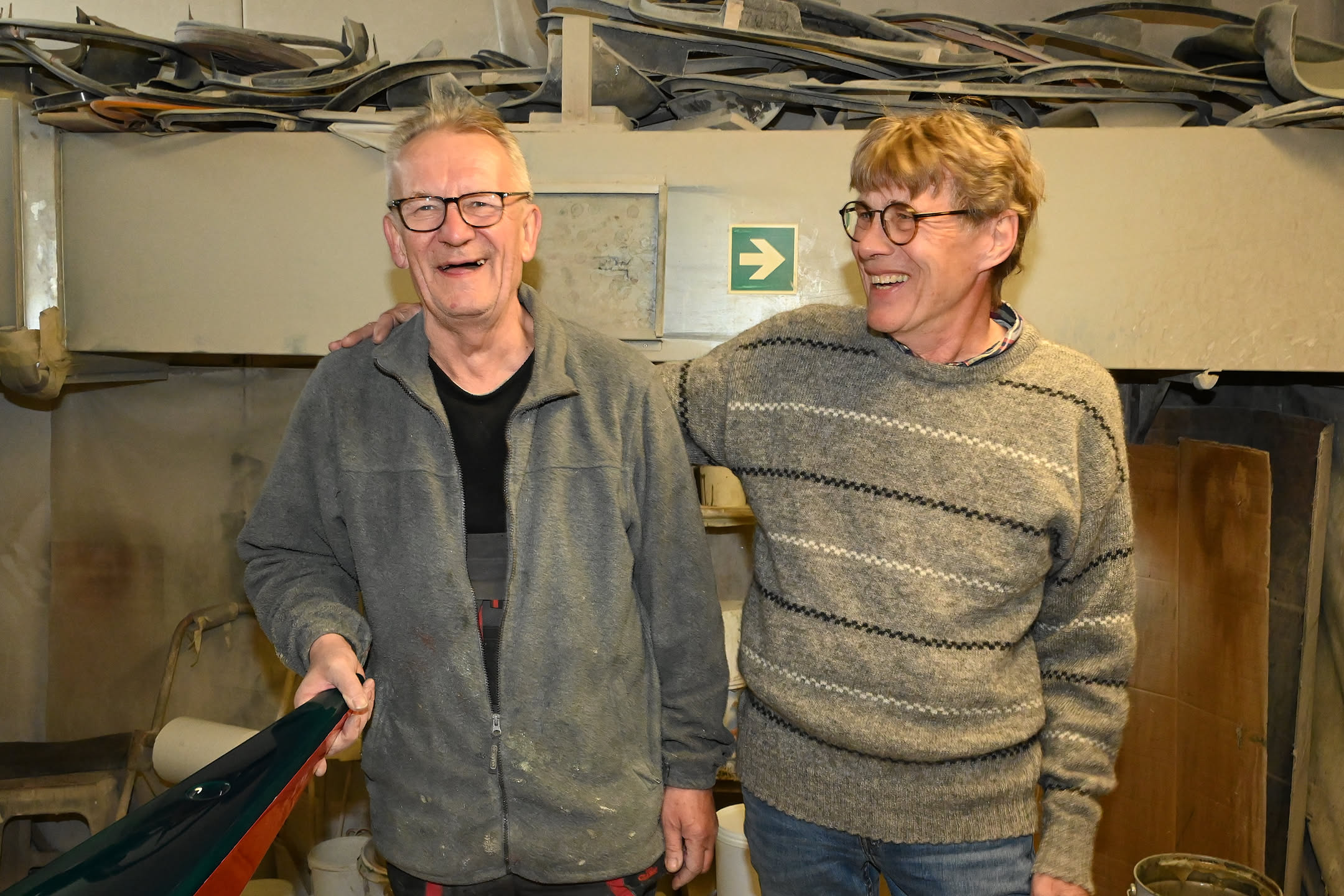
Johan, probably checking the Gantt chart in his head, shot back: "Nonsense, old boy. We can do both." The whole trick was curing time, the hours when the laminate hardens and nothing else can happen. Do the heavy spraying and filling late in the day, let it cure overnight, and the sanding starts first thing next morning. No dead time.
Artur had been in the business forever and was respected for good reason. He didn't hear a smart schedule, he heard criticism. He blew up, stormed off and cursed so hard that Johan was honestly worried he'd come back and smash the moulds out of spite. After some intense diplomacy (beer may or may not have been involved) Artur came back to the shop floor. His only concession, short and slightly defeated: "OK, I will do my best."
He did. He hit Johan's schedule, and both of them learned something.
The power of a dented bottom
Another time Artur managed to put a nasty dent in the bottom of a canoe. Ruined. A moment of silence was observed for the cosmic tragedy (I meant cosmetic, but you get it). A week of work gone, poof, and Artur was furious, at himself this time. Johan pulled out all his positivity and repair experience, found a fix that actually looked good, and showed Artur how to do it.
Later, in a rare moment of workshop sincerity, Artur looked Johan in the eye, shook his hand and said: "You are my motivator."
That's product development for you. Swearing, sweat, and every now and then a handshake.
Cooking kayaks: the 70°C cure
Now the really nerdy bit: making the laminate stronger.
According to Johan, kayaks are like chocolate. Handle them badly in the heat and they suffer. A container on its way from the factory to a dealer can easily hit 70°C, which can soften the resin and give you delamination, deformation and every other bad word starting with de-. So Michael, in an act of management with heart, had an enormous curing oven built and surprised Johan with it on his next visit. The result: more reliable quality and lighter kayaks.
The oven doesn't just dry the kayak. The heat drives more cross-linking between the molecular chains in the laminate, so it gets stronger and shrugs off a 70°C container trip or a summer parked in the Mediterranean sun.
The gold standard in aerospace and racing boats is pre-preg cured under pressure in an autoclave, but for big parts that's insanely expensive. Michael might secretly dream of a 10 bar autoclave, but as Johan points out, cooking a few kayaks at a time in a machine like that is overkill and nowhere near worth the money.
Btw, if you ever visit the factory you'll meet Michael's cats. They have funny names, Göbbels for one, and they're not really his cats. They're strays he once took to the vet or fed, and then they decided to "work" there. Once I went with Michael to the butcher's down the road and he bought fresh meat. I had no idea what for. We got back and he fed the cats. Management with heart, like I said.
The sultans of composites: Västervik
Want to see scale? Go to Västervik, Sweden. That's where the Marström factory is, with a legendary autoclave that swallows parts up to 35 metres long. They make composite masts in it. Add a spray booth and an assembly hall just as long, all built where a sawmill used to be. Impressive place.
Marström started out sailing Tornado catamarans at the top level, began making masts and parts for that tiny niche, and suddenly had the whole world as a market. Not a bad start!
Today Västervik is a bit of a composite hub for Sweden. The high-end boat builder Windy (originally Storebro) is there, and Josef, Johan Wirsén's son, has set up shop building advanced drones.
Even there the market is hitting hard, though. The boat industry is in a steep dive and kayaks feel the recession too. No oven can cure a slow market, sadly.
Wrapping up
So, back to how small the kayak world is: Johan Wirsén has had more than 40 boats and kayaks go into serial production. Not bad for a really nice guy, a very decent paddler and a blues guitarist. Hats off, Johan!
//Tibor
Tell us what worked, what didn't, or what you'd try next.